Soliword: Solitaire Link Word
LifePulse Puzzle Game StudioWord
4.877.00 Reviews
- Version
- 1.1.1
- Installs
- 10.00K
- Age Rating
- Everyone
Screenshots
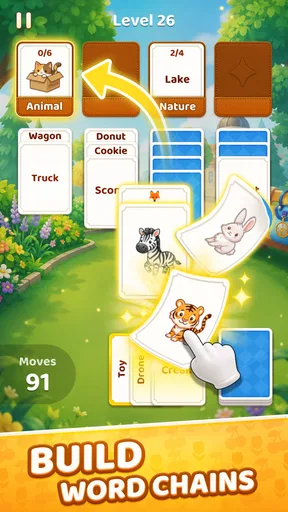
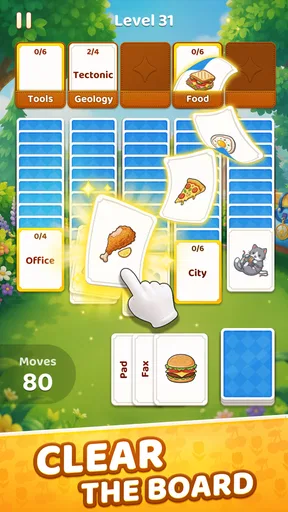
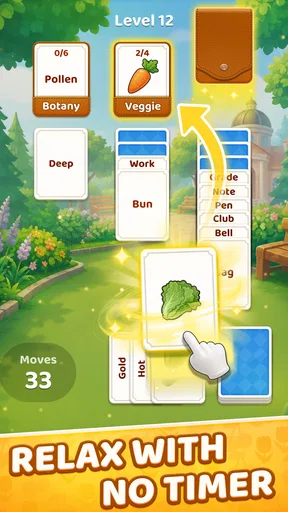
Our Review of Soliword: Solitaire Link Word
 Analysis by Appyee
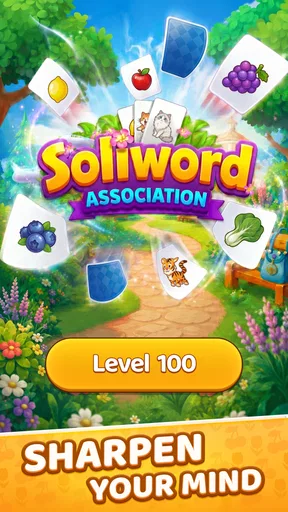
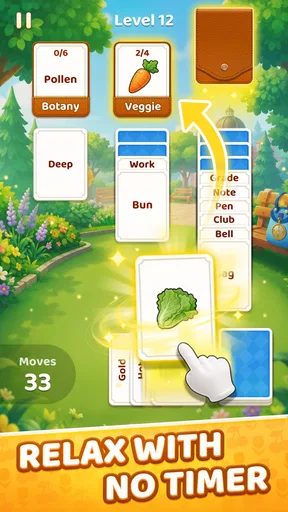
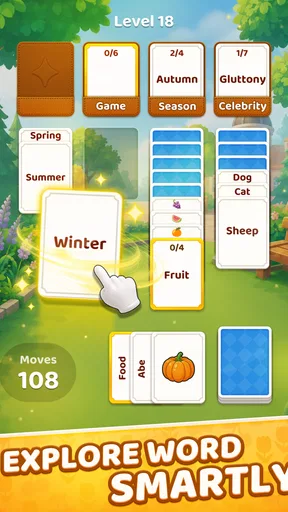
I spent time with Soliword: Solitaire Link Word as a casual word game, and my first impression was that it sits in a pleasant space between a card solitaire session and a word-association puzzle. The idea is easy to understand: you sort and match words through a card-based format, then try to keep your thinking moving without turning the experience into a demanding vocabulary exam. That combination gives it a different rhythm from a standard crossword, an anagram board, or traditional solitaire.
What I like most is how approachable it feels. I can imagine opening it while waiting for an appointment, taking a short break from work, or settling down for a few quiet minutes before bed. It is free to start, rated for Everyone, and works on devices running Android 8.0 or later. Those details make it accessible to a broad audience, although the presence of optional purchases means the free experience is not the only part of the design worth considering.
How the current game feels in everyday play
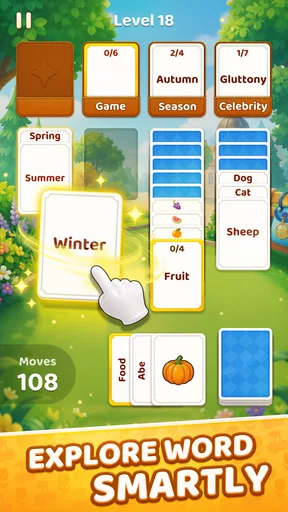
The central appeal comes from the way the game asks me to make connections rather than simply find one correct spelling. In a usual word puzzle, I may be searching for letters, filling a fixed grid, or guessing a definition. Here, the card layout gives the task a more relaxed, tactile quality. I am looking at visible word choices, considering which ones belong together, and deciding whether a tempting match is genuinely useful or merely distracting.
That makes each session feel more flexible than a conventional word search. I do not need to prepare with a dictionary or memorize unusual vocabulary before playing. Instead, I can rely on relationships between words, context, and a little trial and error. The solitaire influence also gives the game a natural sense of progression: I am not just answering isolated questions, but trying to clear or organize what is in front of me efficiently.
For me, this is strongest as a short-session game. It does not demand the same uninterrupted concentration as a long strategy title, yet it still gives my brain something meaningful to do. A realistic use case would be a commute with a few spare minutes. I could play one small stretch, stop when I arrive, and return later without feeling that I had abandoned a complicated campaign or lost the thread of a story.
The word-association angle is also useful for players who enjoy language but do not necessarily want competitive pressure. I found the appeal less about proving that I know the rarest words and more about spotting the relationship the puzzle is inviting me to see. That distinction matters. Someone who enjoys making connections between ideas may find it more satisfying than a game based purely on speed or spelling accuracy.
A simple format with more thought than it first suggests
At first glance, matching words with cards sounds straightforward, and it is. The rules are not difficult to pick up. The interesting part arrives when several possible connections appear at once. A word may seem to fit because it shares a broad theme, while another choice may be more useful for the layout. I learned to pause before making an obvious match and consider what it would leave behind.
That small habit is one of the more valuable ways to play. Instead of treating every match as equally good, I started thinking one move ahead. If two cards can be connected, I ask which choice opens more possibilities and which one risks creating a dead end. This gives the game a light planning layer without making it feel like a heavy puzzle solver.
Another practical tip is to avoid committing to the first association that comes to mind. The quick answer is not always the best answer for the board. Looking across the available cards before tapping helps me notice stronger links and reduces the feeling that I am merely guessing. This is especially helpful when I am tired, because the game rewards a calm scan more than frantic input.
I also found that the card presentation changes how I approach familiar words. In a list, I might process them one by one. In a layout, I naturally compare several at the same time. That makes the same vocabulary feel more like a visual sorting exercise. It is a subtle difference, but it is what gives this title its identity instead of making it feel like another generic word quiz.
What the developer’s current version tells me
The game is made by LifePulse Puzzle Game Studio, and the current version is 1.1.1. I would treat that version as a sign that the product is still in an early stage of its life rather than as proof of a large feature overhaul. The important point for a new player is that the experience should be judged as it exists now: a focused solitaire-style word game, not as a promise of a much broader puzzle platform.
The release date is May 21, 2026, so the game has a relatively recent identity. Its current reception is encouraging, with a 4.8 average from around 958 ratings and over 77 written reviews. It has also passed 10K installs. Those figures suggest that players who have tried it are responding positively, but I would not mistake that early enthusiasm for a guarantee that it will suit every word-game fan.
For someone deciding whether to install it, the version number and recent release matter in a practical way. A newer game can feel more focused because it has not accumulated years of extra systems, menus, and competing modes. That is true here: the concept is easy to grasp, and the game does not need a long explanation before I can begin. The trade-off is that players looking for a huge collection of established content may find the experience narrower than older puzzle apps.
I would also keep expectations realistic about evolution. A later update may refine the balance, improve presentation, or add more variety, but those are possibilities rather than reasons to install today. My recommendation is based on the current core loop, which already works when I want a compact word challenge with a solitaire flavor.
Why existing players may notice the early-stage design
Players who have already started using the game will probably appreciate its consistency more than dramatic change. The strongest part of the design is the basic relationship between cards and words, so any improvement that preserves that clarity would be more valuable to me than adding unrelated modes. A puzzle game like this benefits from clean decisions: I should understand what I can match, why a move matters, and what I can try next.
At the same time, early-stage simplicity can expose limitations. If I play for a long stretch, I may begin to want more variation in the way challenges are presented. A focused format is excellent for a quick break, but repeated sessions can feel more familiar once I have learned the basic habits. That does not make the game poor; it simply means its long-term appeal depends on how much freshness the available puzzles provide.
The current version is therefore best suited to people who value a dependable central idea. I would recommend it to a friend who wants a calm word game and does not need a large social layer, an elaborate story, or a deep progression system. I would be more cautious with a friend who expects a broad collection of modes from the first launch.
The free price makes trying it straightforward, but I would still pay attention to how optional purchases fit into my own habits. Individual in-app items range from $1.99 to $99.99. I do not see that as a reason to dismiss the game, but it is a reminder to decide in advance whether I am comfortable staying with the free path or spending for extras. For a casual player, the safest approach is to begin without buying anything and judge whether the basic play loop is satisfying on its own.
Where it stands beside familiar word-game alternatives
Compared with a crossword, this game feels less dependent on precise clues and more focused on flexible association. A crossword is the better choice when I want a structured grid, layered clues, and the satisfaction of filling intersecting answers. Soliword is more comfortable when I want visual sorting and a shorter commitment.
Compared with an anagram game, it also asks for a different kind of attention. Anagrams reward letter manipulation and fast recognition of possible words. This title is more about meaning and grouping. If I enjoy rearranging letters, I may prefer an anagram board; if I enjoy asking what concepts belong together, the card approach is more natural.
Traditional solitaire offers a useful comparison too. Solitaire usually tests sequence management and probability within a familiar card system. This game borrows the accessible card-session feeling but adds language as the main source of decisions. That makes it a good middle ground for someone who finds pure solitaire relaxing but wants a little more mental variety.
There is a trade-off in that blend. The word layer gives the game personality, but players who want classic card strategy may find the associations too loose. Likewise, serious word-game competitors may prefer a title with timed rounds, ranked scores, or a more demanding dictionary challenge. I would choose this one for relaxed thinking rather than for proving skill against other players.
Small techniques that improve the experience
My most useful approach is to separate recognition from action. I first scan the whole visible arrangement, then identify possible pairs or groups, and only afterward make a move. This prevents me from spending the session reacting to the most noticeable card. It also makes the game feel less random because I am creating a plan instead of tapping impulsively.
A second technique is to use uncertain matches as information rather than immediately treating them as mistakes. When a connection looks plausible but not obvious, I consider what other words it competes with. The board can reveal which interpretation is more productive. That mindset is helpful for players who become frustrated when their first idea is not the intended one.
A third tip is to play in a setting that matches the game’s pace. I would not choose it when I have only a few seconds or when I need an intense action distraction. It works better during a quiet pause, with enough attention to compare the cards. Background interruptions can make a thoughtful association feel harder than it really is.
Parents and families may also appreciate the Everyone rating, but I would still describe the game accurately to younger players: it is a word-and-card puzzle, not an educational course with a guaranteed learning program. It can encourage observation and vocabulary connections, yet the main purpose is entertainment. That makes it suitable for shared casual play, especially when an adult wants something calmer than a fast arcade game.
Who should install it, and who should look elsewhere
I think it is a good fit for players who enjoy word associations, light solitaire mechanics, and games that can be played in small pieces. It is especially appealing if I want a low-pressure alternative to crosswords and do not mind that the challenge comes from deciding how words relate rather than solving formal clues.
I would skip it if my priority is competitive scoring, multiplayer interaction, a narrative campaign, or a large collection of unrelated puzzle types. I would also look elsewhere if I dislike ambiguity in word relationships. The enjoyment depends partly on being willing to examine a connection and adjust my thinking, not simply receiving a single obvious answer every time.
People who are sensitive to purchase prompts should approach the free download thoughtfully because optional items are part of the product. I would begin with the unpaid experience, avoid assuming that every convenience is necessary, and only consider spending if the game has already earned a place in my routine. That keeps the decision based on actual enjoyment rather than curiosity about extras.
What I would watch as the game develops
The next important question is not whether the basic idea works; it does. I would watch how LifePulse Puzzle Game Studio expands variety without weakening the clean card-and-word relationship. More challenge variety could help regular players, but too many systems might make a previously friendly game feel cluttered.
I would also pay attention to how well the difficulty serves different audiences. New players need associations that teach the rhythm of the game, while experienced players need enough freshness to prevent every session from feeling predictable. A good balance would let the title remain welcoming without becoming shallow after repeated use.
For existing users, meaningful refinement would matter more than a long list of additions. Clearer feedback, satisfying progression, and puzzles that reward careful planning would strengthen the parts I already enjoy. I would be less interested in features that distract from the simple pleasure of sorting and linking words.
My final view is positive but measured. Soliword: Solitaire Link Word is at its best as a thoughtful, easy-to-start break: more mentally engaging than idle tapping, less demanding than a serious crossword, and distinct from ordinary solitaire because language drives the decisions. Its recent version and early reception give it a promising foundation, while its focused format and optional purchases are worth keeping in mind. I would recommend trying it if you want relaxed word play with cards, especially when a short, quiet session is exactly what you need.
Verdict
Strengths of Soliword: Solitaire Link Word
- Combines solitaire and word puzzles for varied, relaxing gameplay.
- Short rounds make it easy to play during quick breaks.
- Word challenges can help reinforce spelling and vocabulary.
- Simple card-and-letter mechanics are easy to learn.
- Progression offers a satisfying sense of achievement over time.
Limitations of Soliword: Solitaire Link Word
- Some puzzles may feel repetitive after extended play sessions.
- Difficulty can vary noticeably between consecutive levels.
- Hints or extra moves may be limited without in-game resources.
- Requires concentration, which may reduce its appeal for casual play.
- Players seeking traditional solitaire may find the word element distracting.
Other Releases by LifePulse Puzzle Game Studio
View All
Difference: Spot & Find Master
Puzzle4.9

Hidden Folks: Scavenger Hunt
Board4.9

3D Goods Store: Sorting Games
Casual4.9
Similar Picks in This Category
View All
Word Search - Word Puzzle Game
Bluetile4.8

Word Search Quest - Puzzles
Blackout Lab4.8

CodyCross: Crossword Puzzles
Fanatee, Inc.4.7

Words of Wonders: Crossword
Fugo Games4.9

Wordscapes: Word puzzle game
PeopleFun4.7

Word Search Explorer
PlaySimple Games4.9
Frequently Asked Questions
What is Soliword: Solitaire Link Word?
Soliword: Solitaire Link Word combines classic solitaire-style card play with a word puzzle challenge. Instead of simply clearing cards, you connect available letters to form words and progress through levels. The game is designed for short, relaxing sessions, while gradually introducing more difficult layouts, longer word combinations, and strategic choices that require both vocabulary and careful planning.
How do you play Soliword: Solitaire Link Word?
Gameplay generally involves selecting or linking letters revealed through a solitaire-inspired arrangement to create valid words. Removing letters can uncover new cards and open additional moves, so choosing the right word order is important. Players should look for useful combinations, avoid blocking valuable letters, and think several moves ahead when the board becomes more complex.
Can Soliword: Solitaire Link Word be played offline?
Many puzzle games allow the main levels to be played without a constant internet connection, and Soliword may be suitable for playing during travel or when access is limited. However, online features such as advertisements, cloud synchronization, events, updates, leaderboards, or in-app purchases may require connectivity. Check the store listing and test the game offline after installation for the most accurate result.
Is Soliword: Solitaire Link Word free to download and play?
Soliword: Solitaire Link Word can typically be downloaded at no initial cost, but free access may be supported by advertisements, optional purchases, or systems that provide extra hints and other resources. Before downloading, review the app-store description for current pricing details. If children will use the game, consider enabling purchase restrictions to prevent accidental transactions.
Is Soliword: Solitaire Link Word suitable for all ages?
The game is generally appropriate for players who enjoy word puzzles and casual solitaire mechanics, although the recommended age may vary by platform and region. Its vocabulary challenges can be educational and relaxing, but some levels may be difficult for younger players or people learning English. Review the official age rating, privacy information, and any advertising or purchase features before installing.
Play our best games!


